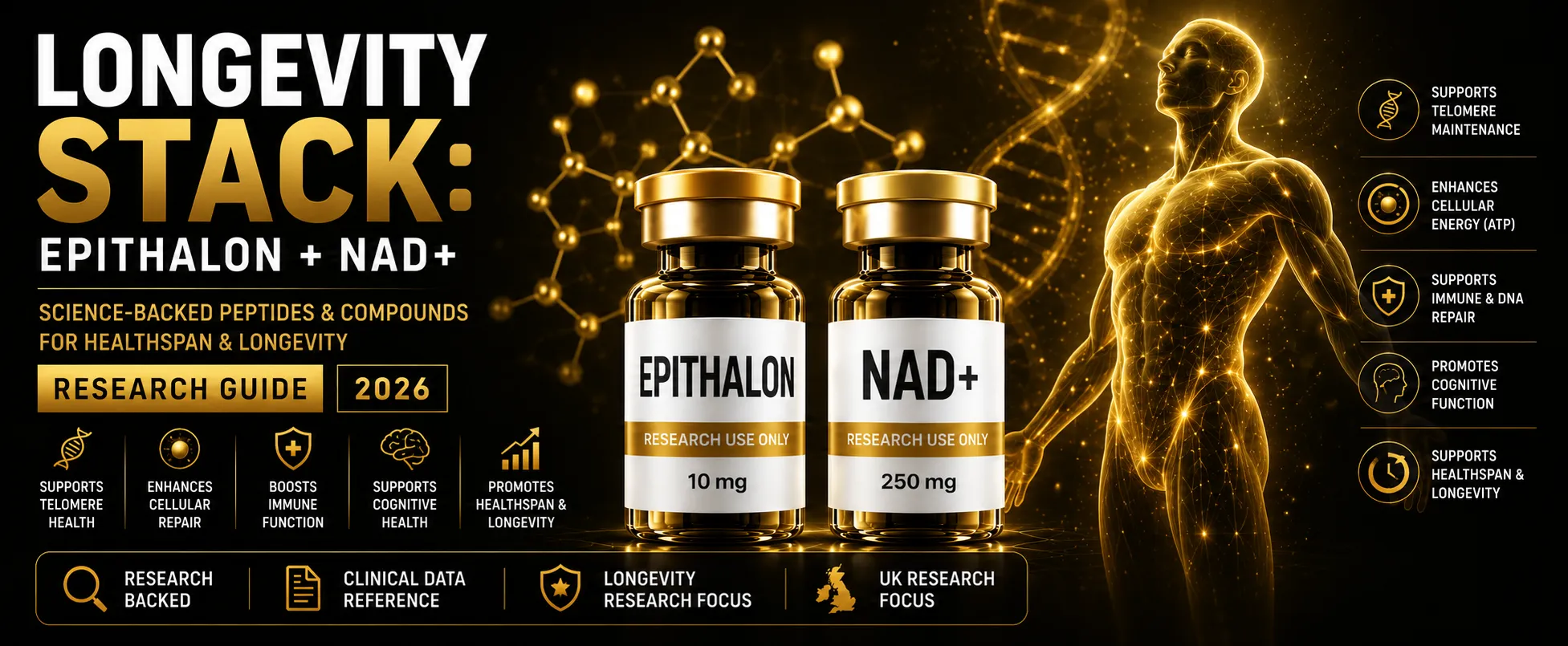
Longevity Stack
Combine Epithalon (Epitalon) with NAD+ to investigate telomere biology, gene expression regulation, and cellular energy metabolism — targeting parallel hallmarks of ageing.
Add Longevity Stack to cart
Choose your strength for each peptide. Stack discount applied automatically.

Mechanism
How these two peptides work together in research models.
NAD+ (Nicotinamide Adenine Dinucleotide) is a central coenzyme in cellular redox reactions and a substrate for sirtuins and PARP enzymes that regulate DNA repair, mitochondrial function, and metabolic homeostasis.
View productEpithalon is a 4-amino-acid tetrapeptide that upregulates telomerase activity and modulates gene expression patterns associated with biological ageing, particularly in neuroendocrine tissues. NAD+ (Nicotinamide Adenine Dinucleotide) is a central coenzyme in cellular redox reactions and a substrate for sirtuins and PARP enzymes that regulate DNA repair, mitochondrial function, and metabolic homeostasis. Together they address complementary ageing hallmarks: Epithalon targets telomere maintenance and neuroendocrine regulation, while NAD+ supports energy metabolism and genomic integrity.
Research Rationale
Epithalon upregulates telomerase and modulates rhythmic gene expression in neuroendocrine models — NAD+ fuels sirtuin-dependent DNA repair and mitochondrial biogenesis
The two compounds target distinct hallmarks of ageing: Epithalon addresses telomere attrition and epigenetic regulation, while NAD+ supports cellular energy sensing and redox balance
Epithalon's effects on the pineal-hypothalamic axis complement NAD+'s role in mitochondrial function and cellular stress resistance
Each compound is supplied independently with batch COAs — design your own dosing schedule for in vitro models
Research Applications
Used in cellular senescence models, telomerase activity assays, mitochondrial function studies (Seahorse assays), and gene expression analysis of ageing markers. Frequently employed in fibroblast, neuronal, and hepatocyte culture systems for longevity research.
FAQs
Other stacks